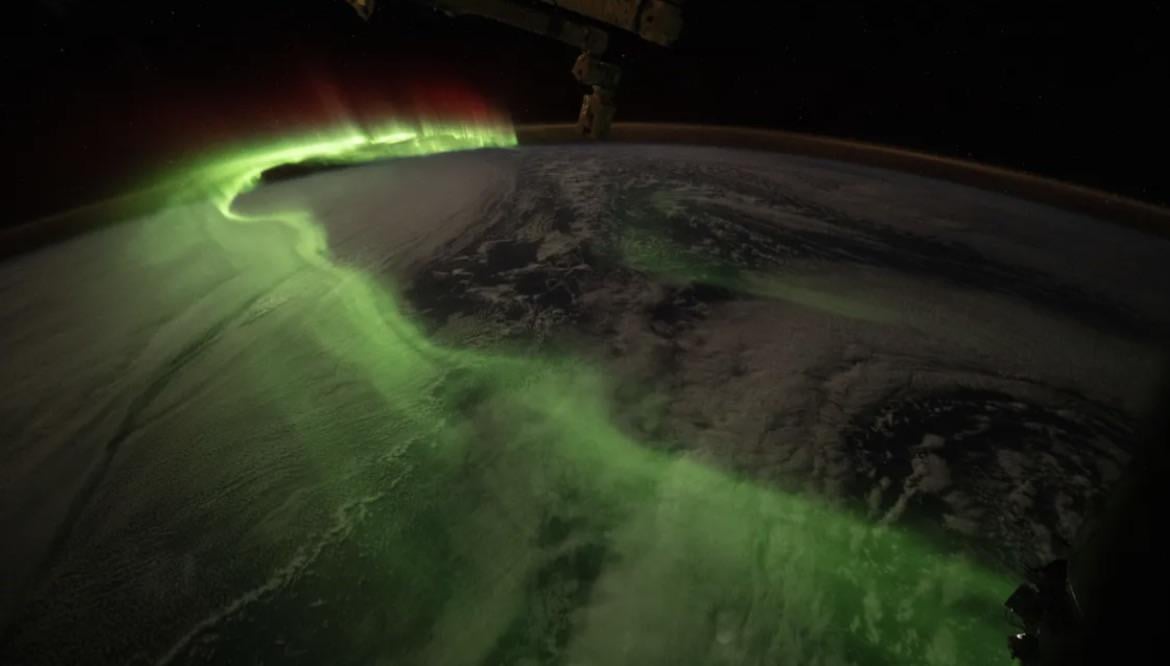
A curtain of aurora seen from 400 km above Earth
Imagine being 400 kilometers above the Earth, surrounded by the inky blackness of space, and witnessing a breathtaking spectacle – a curtain of aurora dancing across the polar skies. This ethereal display is a sight to behold, with shimmering curtains of green and purple light that seem to pulse with an otherworldly energy. As we gaze upon this phenomenon, we can’t help but wonder what secrets lie behind its mesmerizing beauty. The science behind this spectacle is rooted in the Earth’s magnetic field and its interaction with the solar wind, a stream of charged particles emanating from the sun. When these particles collide with the Earth’s atmosphere, they excite the atoms and molecules, causing them to emit light – a process that gives birth to the breathtaking display of the aurora.
The Science of Aurora
The aurora is a complex phenomenon that involves the interaction of the Earth’s magnetic field, the solar wind, and the atmosphere. The Earth’s magnetic field acts as a shield, deflecting the solar wind towards the poles, where it collides with the atmosphere. This collision excites the atoms and molecules, causing them to emit light at specific wavelengths, which we perceive as the colorful display of the aurora. The color of the aurora depends on the energy of the particles and the altitude at which they collide with the atmosphere. Green is the most common color, produced by collisions at altitudes of around 100-200 kilometers, while red is produced by collisions at higher altitudes. The solar wind is not constant, and its intensity varies depending on the sun’s activity, which is why the aurora can be more frequent and intense during periods of high solar activity.
Aurora from Space
Viewing the aurora from space offers a unique perspective on this phenomenon. From 400 kilometers above the Earth, the aurora appears as a thin, glowing curtain that stretches across the polar skies. The curvature of the Earth provides a stunning backdrop for this display, with the blackness of space contrasting beautifully with the vibrant colors of the aurora. The International Space Station, which orbits the Earth at an altitude of around 400 kilometers, provides a perfect vantage point for witnessing this spectacle. Astronauts on board the ISS have captured breathtaking images and videos of the aurora, offering a glimpse into the beauty and complexity of this phenomenon.
Cultural Significance of Aurora
The aurora has captivated human imagination for centuries, with many cultures regarding it as a sign of spiritual or mystical significance. In some cultures, the aurora is believed to be the dance of the spirits, while in others, it is seen as a sign of good luck or prosperity. The aurora has also inspired countless works of art, literature, and music, with its beauty and mystery continuing to captivate artists and writers to this day. As we gaze upon the aurora, we are reminded of the awe-inspiring beauty of the natural world and the many secrets that still lie hidden, waiting to be uncovered.
As we continue to explore and understand the science behind the aurora, we are reminded of the importance of preserving our planet and its natural wonders for future generations. The aurora is a fragile and ephemeral phenomenon, dependent on the delicate balance of the Earth’s magnetic field and the solar wind. As we marvel at its beauty, we are also reminded of our responsibility to protect the Earth and its natural wonders, so that future generations can continue to witness the breathtaking spectacle of the aurora dancing across the polar skies.