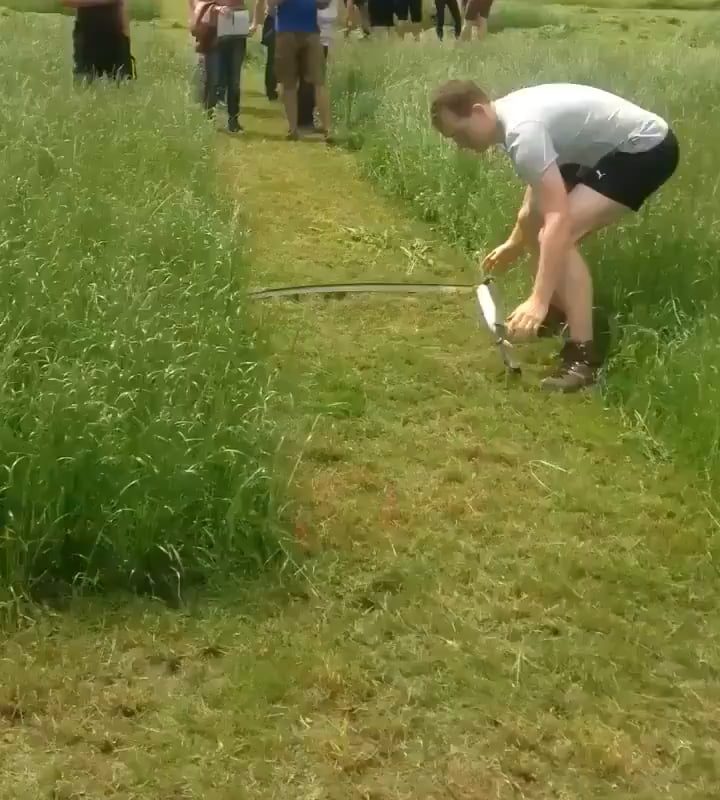
A Scythe in action
As I watched the scythe swing back and forth, its curved blade glinting in the sunlight, I couldn’t help but feel a sense of awe at the simplicity and elegance of this ancient tool. The scythe has been a part of human history for thousands of years, used for everything from harvesting crops to clearing brush, and yet it remains a mysterious and often misunderstood implement. But as I saw it in action, I began to appreciate the subtle dance of movement and balance that makes the scythe such an effective and timeless tool.
The Art of Scything
The scythe is an extension of the body, a tool that requires a deep understanding of movement and rhythm to wield effectively. The scyther stands with feet shoulder-width apart, the scythe held in a relaxed grip, and then begins to swing the blade in a smooth, arcing motion. The goal is not to hack or chop at the vegetation, but to slice through it with a gentle, sweeping motion, using the weight and momentum of the scythe to do the work. It’s a meditative process, one that requires patience, focus, and a deep connection to the natural world. As I watched the scyther at work, I was struck by the way the scythe seemed to become a part of their body, an extension of their arm and shoulder that moved in perfect harmony with their movements.
A Brief History of the Scythe
The scythe has a long and fascinating history that spans thousands of years and multiple continents. The earliest known scythes were made from wood and stone, and were used by ancient civilizations such as the Egyptians and Greeks to harvest crops and clear land. Over time, the design of the scythe evolved to include metal blades and wooden or bamboo handles, and it became an essential tool for farmers and laborers around the world. Despite the advent of modern machinery and technology, the scythe remains a popular tool for many people, particularly those who value the physical and mental benefits of manual labor, as well as the connection to the natural world that it provides.
The Science Behind the Scythe
So why does the scythe remain such an effective tool, even in the age of modern machinery and technology? The answer lies in the science behind the scythe’s design. The curved blade of the scythe is perfectly suited for cutting and harvesting vegetation, allowing the user to slice through even the toughest stems and leaves with ease. The motion of the scythe, meanwhile, is designed to maximize efficiency and minimize fatigue, using the weight and momentum of the blade to do the work. This combination of design and motion makes the scythe an incredibly effective tool, one that is capable of harvesting large quantities of vegetation with minimal effort and exertion.
As I finished watching the scythe in action, I couldn’t help but feel a sense of appreciation for this ancient and elegant tool. The scythe is more than just a relic of the past – it’s a living, breathing part of our history and culture, a symbol of the connection between humans and the natural world. Whether you’re a farmer, a gardener, or simply someone who appreciates the beauty of manual labor, the scythe is a tool that is sure to captivate and inspire, a reminder of the simple, timeless joys of working with the land.