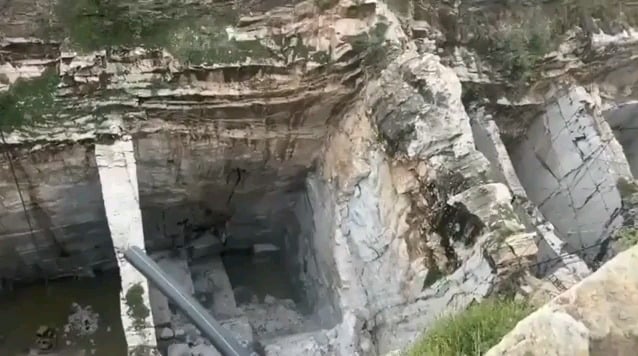
Cliffs collapsing at a marble quarry in Makrana, India due to heavy rainfall.
Imagine walking through a stunning marble quarry, surrounded by towering cliffs of pristine white stone, only to have the ground beneath you start shaking and the sound of rumbling growing louder – the cliffs are collapsing. This is exactly what happened recently in Makrana, India, a region famous for its marble production, where heavy rainfall caused a massive collapse at one of the local quarries. The sheer force of the collapse sent shockwaves through the community, leaving many to wonder how something so dramatic could occur. As it turns out, the story behind this event is as fascinating as it is complex, involving a delicate interplay of geology, weather, and human activity.
The Marble City of Makrana
Makrana, often referred to as the “Marble City,” has been at the heart of India’s marble industry for centuries. The region’s unique geology, with its vast deposits of marble, has made it an ideal location for quarrying. Marble from Makrana has been used in some of the most iconic architectural wonders in India, including the Taj Mahal. The quarries in this area are not just significant for their economic value but also hold a deep cultural and historical importance. However, the heavy rainfall that Makrana experienced recently highlighted the risks and challenges associated with quarrying in this region. The rain saturated the ground, weakening the structure of the cliffs and ultimately leading to the collapse.
Geology and Rainfall: A Deadly Combination
The science behind the collapse is both intriguing and sobering. Marble, while incredibly beautiful and durable, is a metamorphic rock that can be susceptible to erosion and structural weaknesses, especially when exposed to excessive water. Heavy rainfall can infiltrate the marble, exploiting any existing cracks or fissures, and causing the rock to become unstable. In the context of a quarry, where the natural support structures of the rock may have been removed or altered, this instability can be catastrophic. The recent event in Makrana serves as a stark reminder of the power of nature and the importance of considering geological factors in mining and quarrying operations.
Aftermath and Reflection
The collapse of the cliffs at the marble quarry in Makrana has significant implications, not just for the local community and the marble industry, but also for how we think about the interplay between human activity and natural environments. As the world becomes increasingly aware of the need for sustainable practices and environmental stewardship, events like this prompt us to reflect on our impact on the earth. The story of Makrana’s marble quarry is a complex tapestry of natural beauty, human ingenuity, and the unpredictable force of weather, reminding us of the delicate balance between exploiting natural resources and preserving the integrity of our planet.
The collapse of the cliffs in Makrana’s marble quarry is more than just a dramatic event – it’s a window into the intricate and often fragile relationship between human endeavors and the natural world. As we move forward, it’s crucial that we learn from such incidents, embracing a path that balances our needs with the necessity of protecting our planet’s precious resources and landscapes. The marble cliffs of Makrana, with their beauty and their risk, stand as a poignant reminder of this challenge, inviting us to ponder our place within the larger story of the earth and its many wonders.