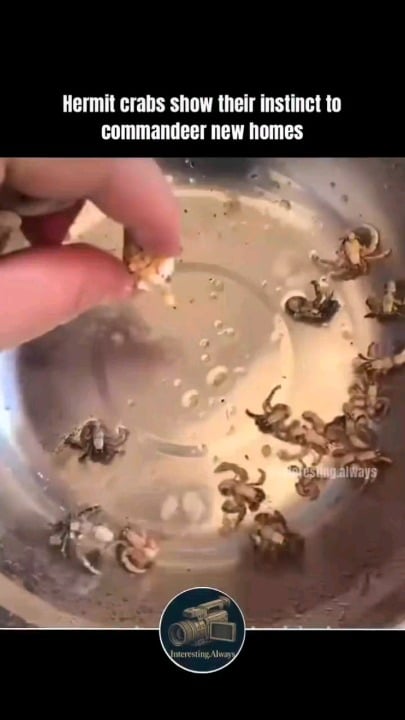
Hermit crabs don’t grow their own shells – they borrow them from the environment, most often from dead snails.
If you’ve ever spent a sunny day at the beach, you might have stumbled upon a tiny, sideways-scuttling creature that’s stolen your heart – the hermit crab. With their big, round eyes and colorful shells, it’s easy to fall in love with these little crustaceans. But have you ever wondered how they get those shells in the first place? As it turns out, hermit crabs don’t grow their own shells like other crustaceans do – instead, they borrow them from the environment, most often from dead snails. This unique adaptation has fascinated scientists and beachcombers alike, and it’s a fascinating story that’s worth exploring.
Shell Shopping
Hermit crabs are incredibly picky about their shells, and they’ll often go to great lengths to find the perfect one. They’ll scour the beach, searching for a shell that’s just the right size and shape to fit their growing body. And it’s not just about finding any old shell – hermit crabs have been known to fight over particularly desirable shells, and they’ll even use complex strategies to outmaneuver their competitors. But why are shells so important to hermit crabs, anyway? The answer lies in their unique biology: without a shell to protect their soft, vulnerable bodies, hermit crabs would be easy prey for predators. By borrowing a shell from the environment, hermit crabs can safeguard themselves and live to scuttle another day.
The Science of Shell-Borrowing
So, how do hermit crabs actually borrow their shells? It’s a surprisingly complex process, involving a combination of smell, touch, and even hearing. Hermit crabs use their sensitive antennae to detect the scent of a dead snail or other shell-bearing creature, and then they’ll use their claws and legs to carefully extract the shell from the surrounding tissue. Once they’ve got the shell, they’ll use their powerful abdominal muscles to pull themselves inside, where they’ll be safe and secure. It’s an remarkable example of evolutionary adaptation, and it’s a testament to the incredible diversity of life on our planet.
A World of Possibilities
As we learn more about the fascinating world of hermit crabs, we’re reminded of the incredible complexity and beauty of the natural world. From the intricate social hierarchies of hermit crab colonies to the remarkable diversity of shell shapes and sizes, there’s no shortage of wonders to discover. And who knows – maybe the next time you’re at the beach, you’ll catch a glimpse of a hermit crab in the act of shell-borrowing, and you’ll be inspired to learn more about these incredible creatures. Whether you’re a seasoned scientist or just a curious beachcomber, the world of hermit crabs is sure to delight and inspire, and it’s a reminder that even in the most unexpected places, there’s always more to discover.
As we watch hermit crabs scuttling across the sand, their borrowed shells glinting in the sunlight, it’s hard not to feel a sense of awe and wonder at the incredible diversity of life on our planet. These tiny, shell-borrowing creatures may be small, but they’ve got a big story to tell – and it’s a story that’s full of fascinating science, remarkable adaptations, and a healthy dose of curiosity and wonder. So next time you’re at the beach, take a closer look at the hermit crabs – you never know what secrets they might be hiding, or what wonders they might inspire you to discover.