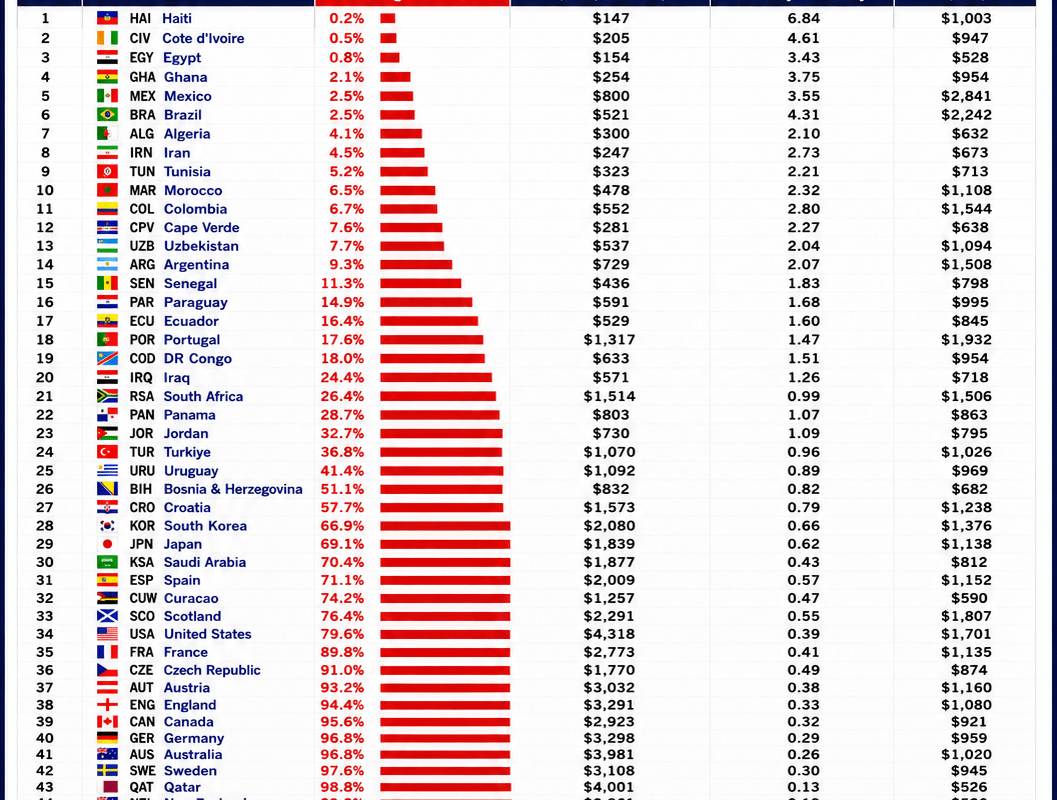
How Many People Could Actually Afford to Watch Their Country at the World Cup? World Cup Unaffordability Index
As the world’s most widely viewed sporting event, the World Cup is supposed to be a unifying force, bringing people together from all corners of the globe to cheer on their favorite teams. But have you ever stopped to think about how many people can actually afford to watch their country play in the World Cup? The answer might surprise you. In a fascinating study, researchers created a World Cup Unaffordability Index, which reveals the stark reality of who can and can’t afford to attend a World Cup match. The results are eye-opening, to say the least, and raise important questions about accessibility and inequality in the world of sports.
The Unaffordability Index: A Closer Look
The World Cup Unaffordability Index takes into account various factors, including the cost of match tickets, travel, and accommodation, to determine how affordable it is for fans to watch their country play in the World Cup. The index is calculated by comparing the cost of attending a match to the average monthly salary in each country. The results show that for many countries, attending a World Cup match is a luxury that only the wealthy can afford. In some cases, the cost of attending a single match is equivalent to several months’ worth of salary, making it impossible for average fans to attend. This raises important questions about who the World Cup is really for: the fans or the wealthy elite?
Global Inequality in the Stands
The World Cup Unaffordability Index also highlights the vast global inequalities that exist in the world of sports. While fans from wealthy countries like the United States and Germany may take it for granted that they can attend a World Cup match, fans from poorer countries like Ghana or Honduras may have to save for years just to afford a single ticket. This disparity is not only unfair but also undermines the spirit of the World Cup, which is supposed to be a celebration of international unity and solidarity. The index serves as a stark reminder of the economic realities that shape our world and the need for greater accessibility and affordability in sports.
A Call to Action
So what can be done to make the World Cup more accessible to fans from all walks of life? One possible solution is for FIFA to implement more affordable ticket pricing and to work with governments and sponsors to provide subsidies and discounts for fans from poorer countries. Additionally, broadcasters and streaming services can play a crucial role in making the World Cup more accessible by providing free or low-cost coverage of matches. By working together, we can create a more inclusive and equitable World Cup that truly reflects the diversity and passion of football fans around the world.
As the world gears up for the next World Cup, it’s essential to remember that the beautiful game is supposed to be just that – beautiful – and accessible to all, regardless of income or social status. By shedding light on the World Cup Unaffordability Index and the issues it raises, we can start a conversation about how to make the World Cup more inclusive and affordable for fans everywhere. Only then can we truly say that the World Cup is a celebration of football that belongs to everyone, not just the privileged few.