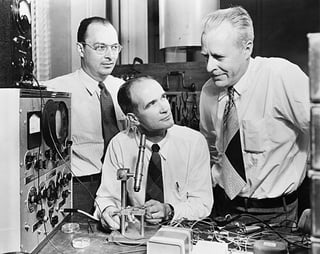
In 1947, John Bardeen and Walter Brattain built the point-contact transistor, the first working transistor ever demonstrated. It became the ancestor of the billions of transistors that power today’s computers, smartphones, and digital electronics.
The year was 1947, and the world was on the cusp of a technological revolution. It was the year that John Bardeen and Walter Brattain, two brilliant physicists at Bell Labs, built the point-contact transistor, the first working transistor ever demonstrated. Can you imagine a world without the tiny, powerful transistors that power our computers, smartphones, and digital electronics? It’s hard to fathom, but it’s a reality that was only made possible by the groundbreaking work of these two pioneers. The transistor’s impact on modern technology has been nothing short of profound, and it’s fascinating to think about how it all began.
The Birth of the Transistor
The story of the transistor’s invention is a fascinating one. Bardeen and Brattain were working on a project to improve the reliability of telephone switchboards, which at the time were prone to overheating and mechanical failures. They were experimenting with different materials and configurations, trying to find a way to amplify weak electrical signals without generating too much heat. After months of trial and error, they finally hit upon the idea of using a combination of germanium and gold to create a device that could control the flow of electrical current. The result was the point-contact transistor, a tiny device that could amplify or switch electronic signals with unprecedented efficiency and reliability.
The Science Behind the Transistor
So, how does a transistor actually work? In simple terms, a transistor is a device that can control the flow of electrical current by applying a small voltage to a special layer of material called the base. This voltage causes the transistor to switch on or off, allowing it to amplify or modulate the current flowing through it. The point-contact transistor used a unique configuration of metal contacts and germanium to achieve this effect, and its invention paved the way for the development of more advanced transistor designs. Today, transistors are made using a variety of materials and techniques, but the basic principle remains the same: to control the flow of electrical current using a small voltage applied to a special layer of material.
A Legacy of Innovation
The impact of the transistor’s invention cannot be overstated. It revolutionized the field of electronics, enabling the development of smaller, faster, and more reliable devices that have transformed the way we live and work. From the first commercial computers to the smartphones and tablets we use today, transistors have played a crucial role in shaping the modern technological landscape. And it all started with the pioneering work of John Bardeen and Walter Brattain, who dared to dream of a world where electronic devices could be smaller, faster, and more powerful. Their legacy continues to inspire innovation and discovery, and their contribution to the development of modern technology will never be forgotten.
As we look back on the invention of the transistor, it’s amazing to think about how far we’ve come. From the humble beginnings of the point-contact transistor to the sophisticated devices that power our modern world, the journey has been long and winding, but the impact has been profound. The next time you pick up your smartphone or boot up your computer, take a moment to appreciate the tiny, powerful transistors that make it all possible – and the two brilliant physicists who started it all.