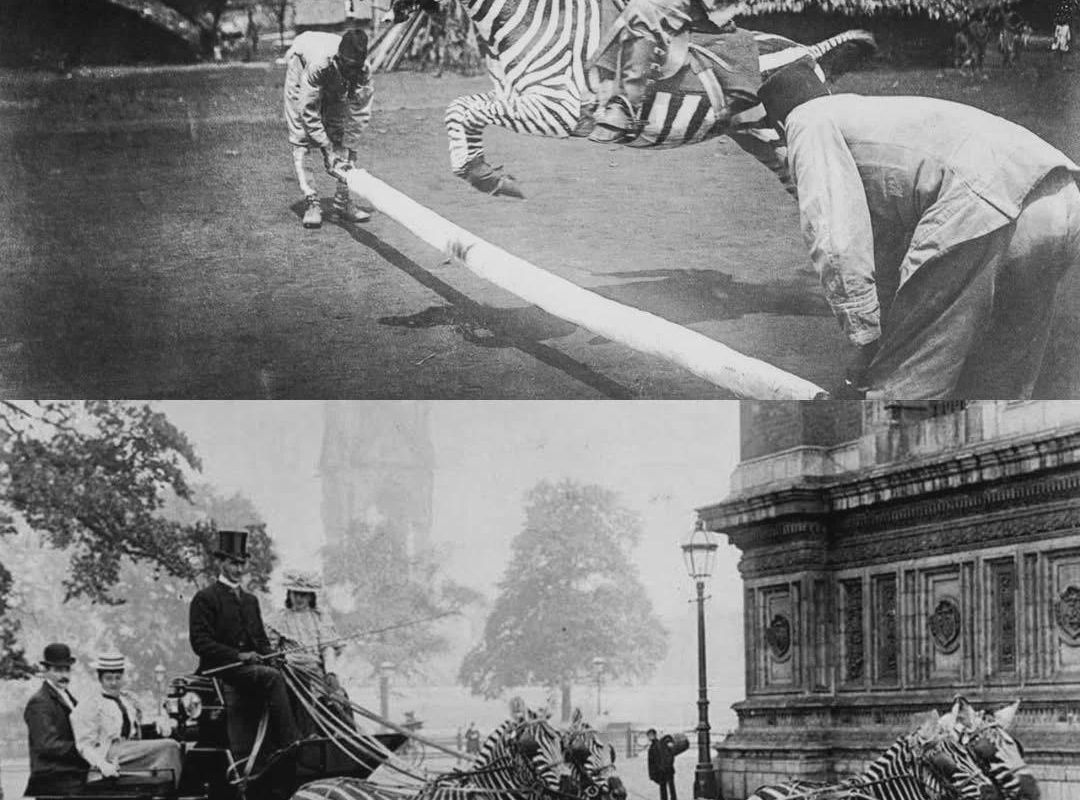
In the Late 1800s, Scientists Believed Zebras Could Replace Horses—But After Decades of Training, Crossbreeding, and Failed Experiments, Their Wild Nature Proved Impossible to Tame
In the late 1800s, the world was on the cusp of a revolutionary idea – what if zebras, with their striking black and white stripes, could replace horses as the primary mode of transportation and labor? It sounds like the stuff of fantasy, but scientists and breeders of the time were dead serious about exploring the possibility. They envisioned a future where zebras, with their robust health and endurance, would be the go-to choice for farmers, traders, and travelers alike. But, as we now know, this vision was not meant to be. The story of how zebras were almost domesticated is a fascinating tale of science, experimentation, and the unyielding power of nature.
The Allure of Zebras
The idea of domesticating zebras was not entirely far-fetched. After all, horses had been domesticated thousands of years ago, and it was thought that zebras, being closely related to horses, could be tamed in a similar manner. Scientists believed that with the right training and breeding, zebras could be taught to obey commands, carry loads, and even be ridden like horses. The potential benefits were enormous – zebras were known to be more resistant to diseases and required less food and water than horses, making them an attractive alternative for farmers and traders. However, as breeders and scientists soon discovered, zebras were not as easily tamed as they had hoped.
The Challenges of Domestication
Despite decades of effort, zebras proved to be notoriously difficult to train and breed. They were skittish, aggressive, and prone to panic, making them a challenge to handle and care for. Crossbreeding experiments between zebras and horses, known as zorses or zebroids, were attempted, but the offspring often inherited the worst traits of both parents – the stubbornness of zebras and the size of horses. The experiments were not only costly and time-consuming but also often ended in failure, with many zebras escaping or injuring their handlers. As the years went by, it became increasingly clear that zebras were not meant to be domesticated, and the dream of replacing horses with these striking creatures slowly faded away.
A Lesson in Humility
The story of the failed zebra domestication experiments serves as a reminder of the power and complexity of nature. Despite our best efforts, some creatures are simply not meant to be tamed, and it’s a lesson that scientists and breeders have learned the hard way. Today, we can appreciate zebras for what they are – wild, beautiful, and untamed animals that continue to fascinate and inspire us. As we look back on the history of zebra domestication, we are reminded of the importance of respecting and preserving the natural world, rather than trying to bend it to our will. And who knows, maybe one day we’ll find a new use for zebras, one that doesn’t involve trying to tame their wild spirit.
As we reflect on the fascinating story of zebra domestication, we are left with a sense of awe and respect for these incredible creatures. Their wild nature, once seen as a challenge to be overcome, is now celebrated as a testament to the enduring power of the natural world. And as we continue to explore and learn from the world around us, we would do well to remember the lessons of the past – that some things are better left wild, and that the beauty of nature lies in its untamed and unbridled spirit.