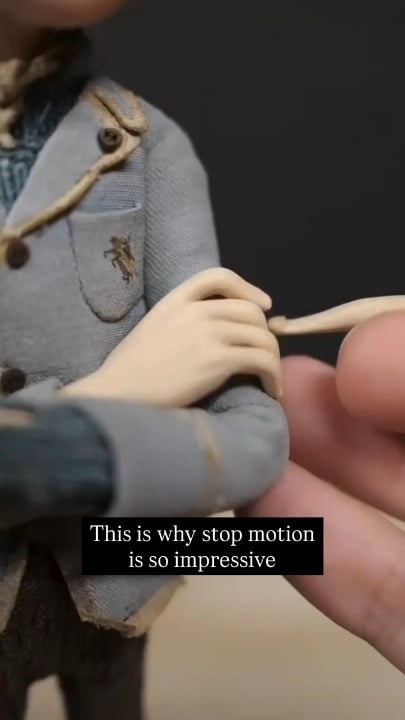
Stop motion animation at this level is an extremely detailed process where every movement is built frame by frame using handcrafted puppets and miniature sets. Studios like Laika Studios push the limits of patience and precision, often producing only a few seconds of usable footage each week.
Films like Coraline show how hundreds of tiny adjustments and thousands of photographed frames come together to create smooth cinematic motion. What looks effortless on screen is actually the result of meticulous manual work, timing, and consistency across entire production teams.
Credit: @laikastudios
Stop motion animation has been mesmerizing audiences for decades, from the beloved Christmas specials like Rudolph the Red-Nosed Reindeer to the more recent blockbusters like Coraline and Fantastic Mr. Fox. But have you ever stopped to think about the incredible amount of work that goes into creating these films? Behind the charming characters and engaging storylines lies a painstaking process that requires patience, precision, and a whole lot of creativity. The art of stop motion animation is a fascinating blend of traditional craftsmanship and modern technology, making it a truly unique and captivating medium.
The Labor of Love
One of the most striking aspects of stop motion animation is the sheer amount of time and effort that goes into producing just a few seconds of footage. Each character, set, and prop is meticulously crafted by hand, with every detail carefully considered to bring the world to life. The animators then painstakingly manipulate these objects, often moving them just a fraction of an inch at a time, to create the illusion of movement. This process is repeated thousands of times, with each frame carefully captured and edited to create a seamless flow. It’s a labor of love that requires an enormous amount of dedication and attention to detail, but the end result is well worth it.
The Science of Illusion
So, how exactly do stop motion animators create the illusion of movement? It all comes down to a fundamental principle of human perception known as persistence of vision. When we see a series of still images in rapid succession, our brains blend them together to create the illusion of continuous motion. Stop motion animators exploit this phenomenon by capturing a series of still frames, each with the characters or objects in slightly different positions. When these frames are played back in sequence, the result is a smooth and convincing motion that draws the viewer in. It’s a remarkable example of how our brains can be tricked into seeing something that isn’t really there, and it’s a testament to the power of animation to create entire worlds and characters from scratch.
A Timeless Art Form
Despite the advent of modern computer-generated imagery (CGI), stop motion animation remains a timeless and captivating art form. There’s something uniquely charming about the tactile, handmade quality of stop motion that is hard to replicate with digital technology. Perhaps it’s the subtle imperfections and quirks that come from working with physical materials, or the sense of history and tradition that underlies this venerable craft. Whatever the reason, stop motion animation continues to enchant audiences around the world, and its influence can be seen in everything from advertising and music videos to feature films and television shows.
As we watch our favorite stop motion films, it’s easy to get caught up in the magic of the story and forget about the incredible craftsmanship that went into creating it. But next time you’re watching a stop motion classic, take a moment to appreciate the hidden craft behind the animation. The patience, precision, and creativity that goes into bringing these characters and worlds to life is a truly remarkable thing, and it’s a big part of what makes stop motion animation so enduringly charming. Whether you’re a longtime fan of the genre or just discovering its joys, there’s no denying the timeless appeal of this unique and captivating art form.