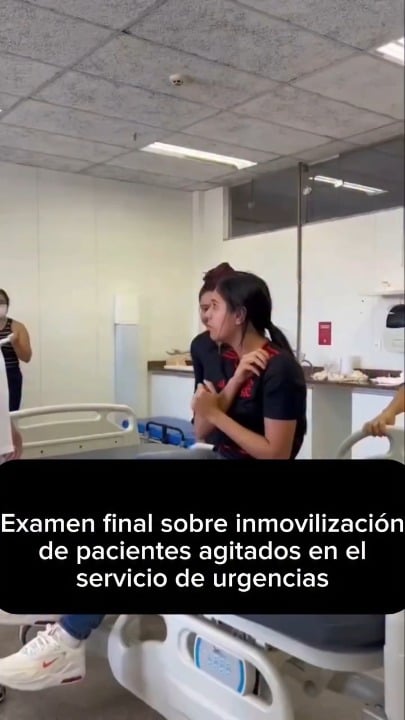
Healthcare workers participating in a medical simulation for an agitated patient scenario.
Imagine being in a high-pressure situation where every decision counts, and the slightest mistake can have severe consequences. This is the world of healthcare workers, where the stakes are incredibly high, and the need for precision and calm is paramount. To prepare for such scenarios, healthcare workers are increasingly participating in medical simulations, specifically designed to mimic the most challenging situations they might face in real life. One of the most critical scenarios they practice is handling an agitated patient, a situation that demands a delicate balance of empathy, professional competence, and safety protocols.
Understanding the Simulation
These simulations are not merely pretend scenarios; they are meticulously crafted to reflect real-life situations as closely as possible. The setting might include a mock hospital room, complete with mannequins that can simulate a wide range of physiological responses, from breathing and heart rate to more complex responses like responding to medications. The goal is to create an environment so realistic that participants can immerse themselves fully, reacting as they would in an actual emergency. This immersion is key to developing the instinctual responses needed in high-stress situations.
The Science Behind the Simulation
The science behind these simulations is fascinating. It’s based on the understanding that the more realistic the training, the better the learning retention and the more confident the healthcare workers will be in real situations. By simulating various scenarios, including those involving agitated patients, healthcare workers can learn how to de-escalate conflicts, prioritize patient safety, and make quick, effective decisions. The simulations also allow for the testing of new protocols and the refinement of existing ones, all in a controlled environment where mistakes can be made and learned from without real consequences.
Benefits and Future Directions
The benefits of these simulations are multifaceted. They not only improve the confidence and competence of healthcare workers but also contribute to patient safety by reducing the likelihood of errors. Moreover, they provide a platform for continuous learning and adaptation, crucial in a field as dynamic as healthcare. As medical science advances, these simulations will evolve, incorporating new technologies and scenarios, ensuring that healthcare workers are always prepared for the latest challenges they might face. By participating in these simulations, healthcare workers are not just learning how to handle an agitated patient; they are enhancing the overall quality of care, one simulated emergency at a time.
In conclusion, the participation of healthcare workers in medical simulations for scenarios like handling an agitated patient marks a significant step forward in healthcare training. It’s a testament to the profession’s commitment to excellence and patient safety, and it underscores the importance of continuous learning and adaptation in one of the most critical fields of human endeavor. As these simulations continue to advance, we can expect to see even more innovative approaches to training, ultimately leading to better outcomes for patients and a more resilient, competent workforce.