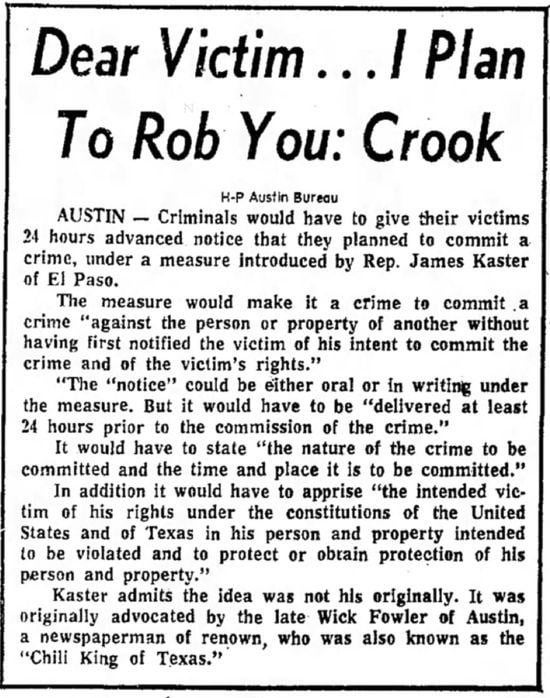
In 1973, Texas State Rep. Jim Kaster filed a bill that, if passed, would force criminals to tell their victims 24 hours before committing the crime that they were doing it. Sadly, the bill was defeated.
Imagine living in a world where you’d receive a courtesy call from a would-be thief, informing you that they’d be breaking into your house the next day. Sounds absurd, right? Well, believe it or not, this was almost a reality in Texas back in 1973. A state representative by the name of Jim Kaster filed a bill that would have required criminals to give their victims a 24-hour heads up before committing a crime. I mean, can you envision the phone call? “Hello, this is your local burglar speaking. Just a friendly reminder that I’ll be stopping by your place tomorrow to, you know, steal some stuff.” It’s almost comical, but the story behind this bill is actually quite fascinating.
The Origins of the Bill
The story goes that Rep. Kaster was trying to make a point about the absurdity of some of the laws on the books at the time. He wanted to highlight the flaws in the system and spark a conversation about the need for more effective crime prevention measures. By proposing a bill that was clearly unenforceable and ridiculous, he hoped to get his colleagues to think critically about the issue. It’s a clever tactic, really – using satire to bring attention to a serious problem. Unfortunately, the bill didn’t make it past the legislative process, but it’s interesting to consider what might have been if it had passed.
The Psychology of Warning
From a psychological perspective, it’s intriguing to think about how people would react to receiving a warning call from a criminal. Would it be a blessing in disguise, allowing potential victims to take precautions and protect themselves? Or would it simply add to the stress and anxiety of knowing that a crime is imminent? It’s likely that people would experience a mix of emotions – fear, anger, and possibly even a sense of helplessness. The warning call would essentially be a cruel form of psychological manipulation, giving the victim just enough time to worry and fret, but not enough time to do anything meaningful to prevent the crime.
A Look Back
Today, it’s amusing to look back on this quirky piece of legislative history. The idea of a “courtesy call” from a criminal seems almost quaint, a relic of a bygone era. But it’s also a reminder that, even in the most unlikely of places, there are people who are willing to think outside the box and challenge the status quo. Rep. Kaster’s bill may not have become a law, but it’s a testament to the power of creative problem-solving and the importance of questioning the norms. So the next time you hear about a wacky law or proposal, remember that there might be more to the story than initially meets the eye.
As I reflect on this strange and fascinating piece of history, I’m reminded that even the most absurd ideas can have a profound impact on our understanding of the world. Who knows what might have been if Rep. Kaster’s bill had passed? Perhaps it would have led to a new era of crime prevention, or maybe it would have simply become a footnote in the annals of legislative history. Either way, it’s a fun thought experiment that challenges us to think creatively about the complex issues that shape our lives.