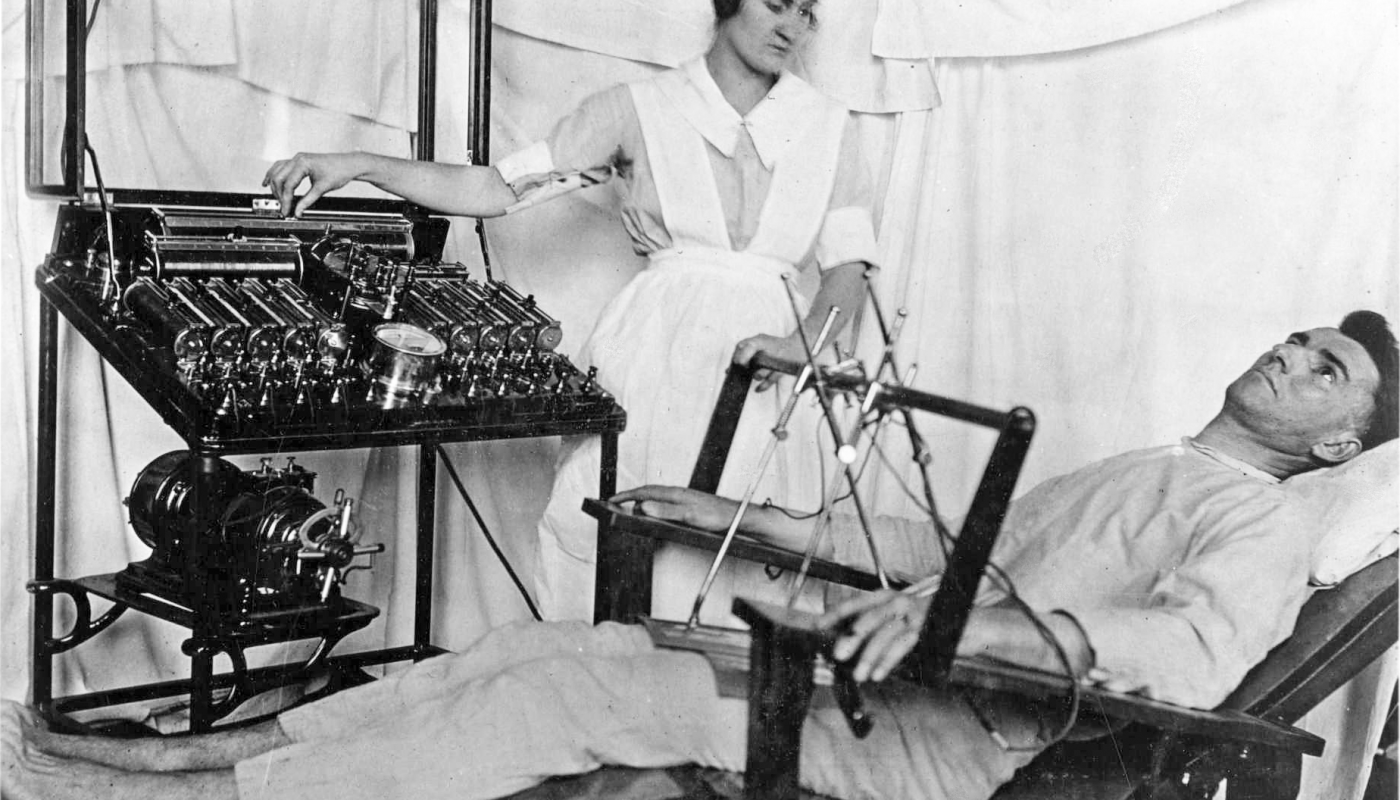
Bergonic chair, an early form of electric theraphy, used in cases of “shell shock” for WWI patients , photos circa late 1910s.
As I delved into the archives of World War I, I stumbled upon a fascinating piece of history – the Bergonic chair, an early form of electric therapy used to treat soldiers suffering from “shell shock.” The term “shell shock” was coined during WWI to describe the trauma and psychological distress experienced by soldiers who had been exposed to the intense bombardment of artillery fire. The condition, now recognized as post-traumatic stress disorder (PTSD), left many soldiers debilitated and in need of innovative treatments. The Bergonic chair, with its peculiar appearance and intriguing purpose, caught my attention and sparked my curiosity. Photos from the late 1910s show patients sitting in the chair, surrounded by electrodes and wires, with a mixture of hope and trepidation on their faces.
The Science Behind the Bergonic Chair
The Bergonic chair was designed to administer a form of electrotherapy, which was believed to have a calming effect on the nervous system. The treatment involved passing a mild electric current through the patient’s body, with the goal of reducing anxiety, insomnia, and other symptoms associated with shell shock. The chair itself was equipped with electrodes that were placed on the patient’s head, neck, and limbs, and the current was adjusted to a level that was comfortable for the patient. While the concept of electrotherapy may seem primitive by today’s standards, it was a pioneering approach to treating mental health conditions, and the Bergonic chair played a significant role in the development of modern psychotherapy.
Treatment and Outcomes
Patients who underwent treatment in the Bergonic chair reported a range of experiences, from feeling a sense of relaxation and calm to experiencing vivid hallucinations. Some patients even claimed that the treatment helped them to recall repressed memories and confront their traumatic experiences. While the effectiveness of the Bergonic chair is difficult to quantify, it is clear that the treatment provided some level of comfort and relief to soldiers who were struggling to cope with the trauma of war. The use of the Bergonic chair also marked an important shift in the way that mental health conditions were viewed and treated, recognizing that shell shock was a legitimate medical condition that required compassionate and innovative care.
A Lasting Legacy
The Bergonic chair may seem like a relic of the past, but its legacy can be seen in the modern treatments that have evolved from this early form of electrotherapy. Today, techniques such as transcranial magnetic stimulation (TMS) and electroconvulsive therapy (ECT) are used to treat a range of mental health conditions, including depression, anxiety, and PTSD. The Bergonic chair may have been a primitive precursor to these modern treatments, but it represents an important milestone in the development of psychotherapy and a testament to the ingenuity and compassion of the medical professionals who sought to heal the wounds of war.
As I reflect on the story of the Bergonic chair, I am struck by the enduring power of human ingenuity and compassion. In the face of unimaginable trauma and suffering, medical professionals and scientists worked tirelessly to develop innovative treatments that could bring comfort and relief to those in need. The Bergonic chair may be a relic of the past, but its legacy continues to inspire and inform our approach to mental health care, reminding us that even in the darkest of times, there is always hope for healing and recovery.